Khamanei dead – here’s what experts say is about to happen next | World | News

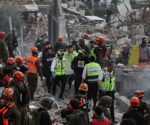
Government supporters mourn during a gathering in Iran (Image: AP)
The death of Ayatollah Ali Khamenei, killed in a joint US-Israeli bombardment, has ripped the lid off the Middle East and left Iran facing its gravest crisis since 1979. The operation, codenamed “Epic Fury” by the Pentagon and “Roaring Lion” by Israel, involved over 200 aircraft and hundreds of cruise missiles striking 500 targets across the country, including the Supreme Leader’s compound in Tehran.
In the aftermath of the bombardment, the regional fallout has been instantaneous. Tehran responded within four hours, launching waves of ballistic missiles and drones that struck targets in Israel and US military installations across the Gulf. Retaliatory strikes hit facilities in Qatar, Bahrain and the UAE. With the man who had the final say over every major policy gone, the question is stark: what happens next?
Read more: Iranians celebrate after death of Ayatollah as they pull down statue
Read more: Iran vows to retaliate with ‘most ferocious’ attack in history after leader dead

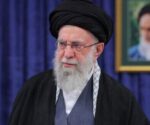
Ayatollah Ali Khamenei has been Iran’s Supreme leader since 1989 (Image: Getty)
Dr Sanam Vakil of Chatham House said: “There is no doubt that we are at a critical moment, one that will reshape the region and profoundly affect Iran itself. The Iranian people will bear the greatest cost.
“For Tehran, this is not a short twelve-day war or a contained round of escalation that can be paused and reset. This new stage of conflict is existential and clearly about regime survival.”
Dr Vakil said the strikes are “a direct blow to the state’s security architecture and governing apparatus” and go far beyond coercive diplomacy.
Mr Trump appeared to be trying to “redefine the terms of that 47-year conflict” between Washington and Tehran and “secure his place in history by trying to resolve it decisively”, she argued.
Dr Vakil said: “Even if such an outcome benefits Israel strategically by removing a hostile government, it does not mean the immediate result for Iranians will be stability or something better. The space between regime collapse and democratic consolidation is historically the most dangerous phase.
“Collapsing a regime is far easier than shaping what follows.”
Ms Bronwen Maddox, director of Chatham House, said: “You don’t do regime change from the air.”
Ms Maddox said the US risks muddying its aims: “The risk is that the US already has multiple stated objectives – ending Iran’s nuclear weapons programme, missiles, and supporting Iranian protesters. That is a recipe for confusion.”
She said that even if Khamenei is gone, the powerful Islamic Revolutionary Guard Corps remains: “The IRGC are a real military-industrial complex running much of the economy, and one of them could end up in charge.”
And the idea of a spontaneous uprising may be wishful thinking.
Ms Maddox said: “President Trump talked about Iran’s protesters. But the protesters already feel betrayed,” recalling that tens of thousands were shot in demonstrations earlier this year. “They do not want to come out again. And they still lack a leader.”
Ms Laurel Rapp, also of Chatham House, said: “Mr Trump’s move is a high-risk break with decades of US policy towards Tehran.”

Ayatollah Ali Khamenei factfile (Image: Anadolu via Getty Images)
She said: “The American strategy appears wholly predicated on the untested proposition that the Iranian people will quickly rise up – a huge gamble.”
If they do not, Ms Rapp said the White House will face a stark choice: “Fold or double down”.
Ms Rapp said that Mr Trump returned to office promising to end “forever wars”. A prolonged campaign – especially one that drifts towards ground involvement or nation-building – would collide head-on with that pledge.
There are immediate regional dangers too with Iran’s Revolutionary Guard threatening its “most intense offensive operation” ever.
Missiles have already struck Gulf states, with damage reported in Dubai and Manama. Protests have erupted from Karachi to Kashmir. Airspace closures have stranded thousands.
Dr Marion Messmer, director of the International Security Programme, said: “Even a weakened Iran is striking back.”
Dr Messmer said the risk is that the conflict escalates and “draws other states in”.
She explained: “The attack set a worrying precedent by continuing a pattern: striking when negotiations are not going as Washington would like them to.”
That may make other countries think twice before trusting US diplomacy in future, Dr Messmer pointed out.
Professor Marc Weller, an expert in international law, said: “It is clear that the US cannot claim to have acted in its own defence.”
There was “no imminent threat requiring a military response”, Prof Weller added.
In Tehran, an almost total internet blackout has cut the country off from the world. Senior military leaders, including the head of Faraja Intelligence, are reported dead. No clear successor has emerged.
One thing is certain: removing one man, even one as powerful as Khamenei, does not automatically dismantle the system he built.
Hours after the strikes began, US President Trump took to social media to confirm the “decapitation” of the Iranian leadership.
He said: “Khamenei, one of the most evil people in history, is dead. This is not only justice for the people of Iran, but for all great Americans and those people from many countries throughout the world that have been killed or mutilated by Khamenei and his gang of bloodthirsty thugs.”
He added that the Iranian people now have their “greatest chance” to take back their country, issuing a direct ultimatum to the security forces to “lay down your arms” or face “certain death”.
In the meantime, the region is braced, with the world watching – and Iran’s future has never been more uncertain.