Remote island where sheep outnumber people and very unique attraction | UK | Travel

The Island is only accessible via one unusual route – in the air (Image: Babett Paul via Getty Images)
Remote from civilisation, this tiny island exists frozen in time, with just fragments of its former existence and a handful of remaining inhabitants.
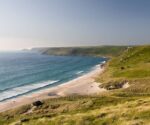
Situated off the West Cork coastline in Ireland lies Dursey, a charming island steeped in heritage but offering little else.
Since the stunning terrain acquired its impressive transport link, visitors have been able to cross from the mainland in an extraordinary manner and explore a location that appears virtually abandoned.
This tranquil island accommodates approximately six permanent inhabitants, with roughly 15 houses deemed habitable and up to seven farmers.
Their animals stay on the island, whilst the landowners who customarily inherited the property continue to spend occasional nights there but never depart permanently. Consequently, sheep likely outnumber people on Dursey.
It’s believed that when Dursey residents have children, they must maintain a primary home on the mainland to access education and other essential services.

Dursey Island has more sheep than people (Image: Getty Images)
Unique attraction
Dursey boasts a rare transport method in Ireland – the nation’s sole cable car. It carries passengers 250m above the Atlantic Ocean across to the island, encircled by nothing but verdant rolling hills.
Starting from Ballaghboy, Cork, on the Irish mainland, the aerial crossing transports passengers to Dursey in merely seven and a half minutes. During the journey, travellers can admire breathtaking coastal panoramas as the small speck of land gradually grows closer.
Built in 1969, it established a permanent and secure link between the island and Cork’s mainland, as the surrounding waters proved too hazardous for reliable maritime transport.
The stretch known as Dursey Sound has displayed volatile behaviour throughout the decades, characterised by rapid tidal currents. Additionally, submerged rocks encircling the island create perilous conditions, rendering it fundamentally unsafe for conventional vessel access.

Originally opened in 1969, it remains Ireland’s only cable car (Image: Stephan Kuhn via Getty Images)
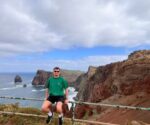
Following their cable car experience, one visitor wrote on TripAdvisor: “For us this was the most beautiful part of Ireland.
“We took our mountain bikes over in the cable car, and luckily for us, the weather was glorious. We saw almost all of the island and spent ages staring at the views. We just haven’t seen anything to top it despite travelling the whole way round Ireland.”
Another added their admiration for the island, sharing: “I absolutely loved Dursey Island. It’s a stunning place, delightfully remote and serene. It is the last place in Europe that the sun sets, a cool fact for you!”.
Historic ruins
Its windswept terrain also harbours numerous weathered historical remains, some tracing back to the 17th century. The most notable of these landmarks is O’Sullivan Beare Castle, largely obliterated during the Nine Years’ War in 1602.
Very little remains of it exist today, and the devastation inflicted by English forces also resulted in a mass slaughter of the local populace.
One visitor said: “Dunboy Castle was very cool, though some information on the site would have been helpful – similar to the plaques found elsewhere. The ruins are overgrown, and you almost stumble into them.”
Another intriguing feature is the 19th-century Napoleonic-era signal tower. It unassumingly perches atop the island’s highest point, originally intended as a deterrent against French invasion.
However, it has lain in ruins since the mid-19th century, untouched and forgotten by time.
Commonly known as the Church of Kilmichael, this monastic church and graveyard lie in ruins on the tranquil island. It’s believed that the church was established by monks from Skellig Michael but was likewise destroyed in the historic siege of 1602 by Sir George Carew’s army.