WW3 fears explode as Russia accused of helping Iran carry out attacks on US bases | World | News
Russia has been accused of providing Iran with targeting information to hit US forces in the Middle East, as fears grow of the war between the US and Israel against Tehran spiralling out of control. The latest eruption of fighting in Iran and neighbouring countries began on Saturday, when the US and Israel unleashed a wave of attacks against the Islamic Republic, killing Iranian supreme leader Ali Khamenei and numerous other high-ranking figures in the country.
The US claims it was aware Israel was about to attack its long-time adversary and acted before Tehran would have a chance to strike back against its bases, with other justifications including ending Tehran’s killings of demonstrators against its regime. However, critics have called for more clarity. More than 1,300 people have lost their lives in the strikes, according to Iran’s semi-official Tasnim news agency, and Tehran’s retaliatory attacks against US bases and allied positions across the Middle East threaten to plunge the region into a wider conflict.
Russia has been a long-time strategic partner of Tehran, with Shahed drones provided by Iran proving crucial in Moscow’s unprovoked full-scale invasion of Ukraine, which began in February 2022.
But despite condemning the on-going joint US-Israeli attacks, Russia has shown no willingness to intervene militarily to defend Tehran.
However, since war broke out on Saturday, February 28, Moscow has has passed Iran the locations of American military assets, including warships and aircraft, three officials familiar with the intelligence claimed.
They were speaking to The Washington Post on the condition of anonymity. “It does seem like it’s a pretty comprehensive effort,” one of them claimed. It’s the first suggestion that another major military adversary of the US is participating in the conflict, The Post reported, whilst noting that the extent Russia’s targeting assistance to Iran, if any, isn’t entirely clear.
Two of the officials said China, also a powerful backer of Iran, didn’t appear to be helping Tehran defend itself.
Moscow has branded the military campaign against Iran an “unprovoked act of armed aggression”, and has called for it to end.
Nicole Grajewski, a fellow in the Nuclear Policy Program at the Carnegie Endowment for International Peace and a specialist on Russia and Iran, told the Post that Tehran’s retaliatory strikes had show a high level of “sophistication” in terms of what the regime has targeted, and in its ability to overwhelm US and allied defenses, in some cases.
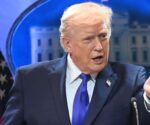
US President Donald Trymp berated a reporter for raising the possibility of Russian involvement when he opened the floor to questions from the media at the end of a White House meeting about how paying student-athletes has recalibrated college sports.
“I have a lot of respect for you, you’ve always been very nice to me,” Trump said to Peter Doocy, the Fox News reporter. “What a stupid question that is to be asking at this time. We’re talking about something else.”
White House Press Secretary Karoline Leavitt said Russian intelligence “clearly is not making a difference with respect to the military operations in Iran because we are completely decimating them”.
She added that the US is “achieving the military objectives of this operation and that is going to continue”.
Along with China, Russia is one of Iran’s most powerful backers. Asked for his message to the two nations this week, US Defense Secretary Pete Hegseth declined to offer one, and said, “they’re not really a factor here”.
The Russian Embassy in Washington, the CIA, and the Pentagon were approached by the outlet for comment but didn’t respond.
Meanwhile, Gulf countries say they have intercepted more ballistic missiles and drones on Saturday (March 7) as Iran launched another wave of retaliatory strikes.
Speaking on Friday, White House spokeswoman Karoline Leavitt said the administration expected military operations to last four to six weeks. But how the conflict will develop remains far from clear.
Some commentators have questioned whether last Saturday’s attacks could be looked back on as the start of World War 3, given the large number of countries that have been dragged into the conflict to various extents.
However, most analysts believe this is unlikely given the reluctance of major powers like China, Russia, and the US’s European allies to get involved in an offensive capacity.
But they acknowledge that it represents a dangerous development for the region fraught with escalation risks.